


Adoption
(IT’S COMMON SENSE)
When discussions amongst my female friends breach the subject of having children, sometimes all I can think of is an essay written by a man; an essay about war. Esquire magazine published William Broyles’ essay “Why Men Love War.” In short, it’s a cornerstone essay in post-Vietnam personal reflection and an attempt to better explain war veterans’ complex relations to their military pasts. It’s full of shocking admissions, palpable acts of cruelty and heroism, near-brilliant insights, and a few references here and there to women who aren’t Vietnamese bar girls. A small but striking piece of the essay is a nine word comparative insert to better explain man’s pulsing desire for war. Broyles writes, “[war] is, for men, at some terrible level, the closest thing to what childbirth is for women: the initiation into the power of life and death.”
Besides the fact that Broyles’ definition may be the manliest depiction of childbirth I have ever read, I remember finding the comparison both mildly offensive and oddly on target. Even if you find his arguments entirely incorrect, and many do in regards to the essay’s views on war and brief throwaway statements on childbirth, you must admit that our society generally agrees with the his vein of argument regarding a woman’s propensity towards starting a biological family.
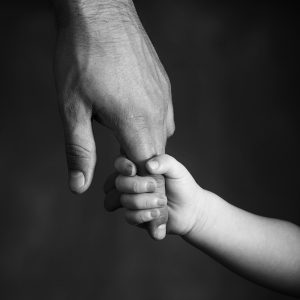
There are so many
abandoned and unwanted
children in an overcrowded
world, taking care of them
should be a first option to
start a family instead of a last
resort for childless couples.
Cosmopolitan or Middle American, career oriented or homemaking, many women see childbirth as an integral part of the feminine or familial experience. There are several, more scientifically illuminating illustrations on the importance of a woman’s desire for biological children, but science is often only what we make of it, and writing a credible essay entitled “Why Women Love Childbirth (or producing children)” is indeed a daunting task. It would most likely conclude that our biological craving for a continuation of our lineage is the go-to culprit of baby fever. How else do you explain that in an age where adoption is achieving an increasing amount of press and societal acceptance, adoption statistics have remained relatively consistent (that is to say, relatively low), with only two to four percent of families including an adopted child?
I’m not going to sit and pat our warmhearted society on the back and say I think two to four percent is an impressive number. It’s difficult to know where to start when posting statistics of children in waiting. If you include every child in every orphanage in around the globe, it’s ethically daunting. If you throw in all the children living through what are often murky purgatories of foster care, the “problem” becomes too large and too abstract, and besides, foster kids have become wrongly synonymous with hopelessness and invisibility. Although age and past abuse has a part in the reported “difficulties” of adopting older children, no child enters the world a lost cause, and there are plenty of studies that show adopted children to be just as or more prone to success when brought into a healthy family environment. Healthy, by the way, meaning either one or two able and loving parents, no matter their sex or age or personal affiliations.
I get that I’m picking at untouchable and sacred subjects of family, inalienable rights of reproduction, and femininity. Biological clocks and baby lust. Touchy subjects, especially with so many women facing frustration and heartbreak at the notion of infertility or birthing complications. I understand that it’s an unfair move to scratch my head and publicly state that I have no idea why rich couples would use surrogate mothers instead of adopting another child, especially after some have already given birth to children, but I do question it, mainly out of objective curiosity. With adoption becoming an increasingly safe and manageable process, I’m not going to pretend that I understand why women put themselves through ethically questionable, eighte-mbryo-at-a-time kinds of fertility treatments that have sprung up in news reports over the past few years. I’m not going to pretend that I understand why adoption is an absolute non-option for many, or why it is so far down on the list. The cynical side gets a sneaking suspicion that for some prospective parents (perhaps all, we are no saints), rejection of adoption partially comes down to a human desire for immortality, creation, and many other flipside attributes that stick inadvertently to love and family and the feminine experience.
Though adoption is generally accepted and promoted throughout our society, it remains one of the most internally divisive subjects for both women and men. There are several excellent sites that bust adoption myths, most of which I’ve heard thrown about in conversation regarding the process. Both criticism and ostentatious praise draw negative attention and obscure what adoption so desperately needs: for families to consider it an option without an association with “the alternative,” heroism, or good deeds. It’s not a good deed. It’s a way to start a family. Changing diapers is smelly and tedious no matter if your child is from your womb or a Chinese orphanage. Neither situation makes you particularly heroic.
Most websites and agencies and speeches are of the mindset that flattering the “good heart” of prospective adoptees will convince them once and for all. Like charity donations, appeal to the hero in anyone, and they might just do anything. Apparently, if I adopt, I’m well on my way to becoming a shining example of the “depth and wonder of the human heart.” I can only hope that with continuing progression, adoptive parents will no longer be seen as brave or heroic. Equating adoption to heroism is like saying the children are a burden, or that the “normal” familial process of biological offspring is always preferable. I just want to adopt because I’ve always wanted to, because it seemed natural as wanting to give birth. There are a few notable exceptions, and while I wouldn’t call those adopting a special needs child ‘heroic,” I admire their self assurance and way in which they are able to knowingly bring a few (sometimes several) extra complications into their lives. When I adopt a child, whatever you do, don’t call me a hero. It’s insulting to my future children.